Carbon dioxide is the essential ingredient behind the perfect pour, responsible for the carbonation in your soda, the crisp bubbles in a lager, the creamy pour of a nitro stout, and the preservation of a fine wine’s freshness. CO2 has remained a fundamental component of the beverage industry for over two centuries. For modern operators, mastering the use of this gas and ensuring a consistent supply is just as critical to quality as selecting the primary ingredients themselves.
A Brief History of CO2 and Carbonation
In 1767, while working near a brewery in Leeds, English chemist Joseph Priestley conducted an experiment by placing water above a vat of fermenting beer. He observed that the water absorbed the beer’s carbon dioxide, resulting in a bubbly, refreshing liquid with a distinct tartness. Carbonation was born! Priestley later published his research (titled “Impregnating Water with Fixed Air“) and created the foundational science for modern artificial carbonation.
In the 1780s, Johann Jacob Schweppe improved on Priestley’s discovery by developing a reliable method for producing carbonated water in large quantities. He started the Schweppes Company, bringing sparkling water to the public for the first time. After that, soda fountains became common in 19th-century pharmacies, bottled carbonated drinks were mass-produced in the early 20th century, and draft beer systems advanced from basic kegs to the precise, pressurized setups used today.
Naturally carbonated water existed long before Priestley’s time. The Romans valued sparkling mineral springs for their unique qualities and supposed health benefits, and people across Europe enjoyed naturally fizzy water for centuries before the science of carbonation was understood. The real change with industrial CO2 was not the effect, but the control. It enabled consistent, reliable carbonation whenever needed, on a large scale.
How CO2 Works in the Beverage Industry
Today, CO2 and nitrogen blends each play important roles in beverage operations.
Draft Beer and Keg Systems
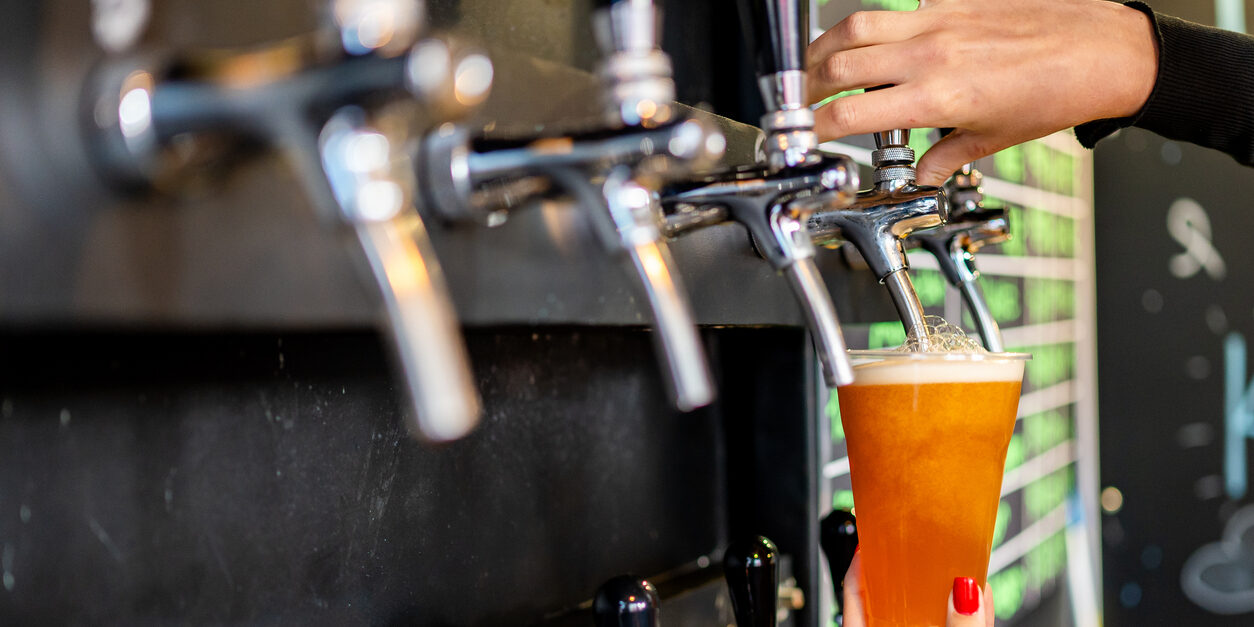
CO2 creates the pressure needed to move beer from the keg to the tap and keeps the right level of bubbles in each style. Lagers, IPAs, wheat beers, and ciders usually use pure CO2. Stouts, porters, and cream ales use a blend of nitrogen and CO2, often in a 75/25 or 70/30 mix, to create the smooth head and pour seen in beers like Guinness. Using the right gas for each beer style is essential to serving a great pint rather than a flat or foamy one.
Soda Fountains
CO2 keeps soda systems fizzy and moves syrup through the lines, making sure each drink is mixed and carbonated correctly. If CO2 pressure drops, sodas go flat, pours become inconsistent, and customers are left disappointed.
Wine Preservation
Blends of nitrogen and CO2 are used to cover open bottles in wine-by-the-glass programs. This prevents oxidation and helps expensive wine last longer.
Nitro Cold Brew
Nitro cold brew uses pure nitrogen to create its smooth texture and creamy head, without adding bubbles. More cocktail programs are also using CO2 and nitrogen to make custom carbonated or nitrogen-infused drinks.
Why Purity Matters as Much as Supply
Not all CO2 is the same, and for beverage operators, the grade of gas you use directly impacts each pour and customer interaction. Beverage-grade CO2 must be at least 99.9% pure and filtered to remove any harmful impurities or flavors. Industrial CO2, used in welding or farming, can contain small amounts of oils, ammonia, or other chemicals that can change the taste, spoil drinks, or even pose safety risks. The difference between industrial and beverage-grade CO2 is real and noticeable in every glass. Purity matters, especially for breweries and high-volume draft operations where consistency is part of the product promise.
Why Restaurants Require Reliable Delivery
If you run out of CO2 during service, it’s more than just a hassle. It hurts your bottom line! Taps stop working, sodas go flat, and customers can’t get what they want. In a busy restaurant on a Friday night, even 30 minutes without CO2 can cost hundreds of dollars and disappoint guests.
At ALL-GAS, we know that beverage businesses don’t work on a regular nine-to-five schedule. Our delivery service keeps your tanks full before you run low, so you won’t need to make last-minute calls. We provide CO2 and other beverage gases, like nitrogen and specialty blends, delivered reliably to restaurants, bars, breweries, and hospitality businesses. Plus, our licensed technicians can check your system, assess your needs, and recommend the best setup for your operation, whether you have one keg line or a large multi-tap system.
ALL-GAS supplies more than just CO2. We offer all the compressed gases your beverage program needs, like nitrogen and specialty blends, delivered reliably throughout Connecticut, Massachusetts, and Rhode Island. Whether you run a local bar, a regional brewery, or a busy restaurant, we make sure you have the supply and support to keep things running smoothly all day.
If you want to find out how ALL-GAS can help your beverage program, reach out to our team or check if we serve your area to get started.